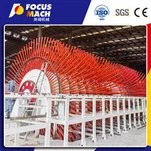
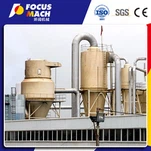
The production of density board begins with the processing of raw materials, which involves the separation of wood into fibers. A crucial step in this process is chipping, where loose wood is cut into chips that meet production specifications to facilitate optimal conditions for fiber separation. Following chipping, wood chips undergo preheating and cooking before mechanical fiber separation takes place. The quality of the hot grinding process significantly impacts the product quality of density boards, emphasizing the necessity to utilize advanced hot grinding machines in the production line. Southeast Wood Industry has introduced state-of-the-art Andretz and Simbelkomp hot grinding machines to ensure industry-leading fiber quality. The combination of hot ground fibers and sizing results in a moisture content of 40% to 50%. Proper drying is essential for subsequent processing stages, with drying temperatures carefully controlled at approximately 165℃ to prevent resin pre-curing and preserve mechanical properties such as static bending (MOR) and tensile strength (IB). During the paving process, dried fibers are stored in bins before being fed through a laying machine using vacuum air for rough molding. Subsequent processes involving sweep rollers and prepress equipment further shape the fibers into boards without causing damage. Hot pressing is a critical stage in density board manufacturing, exerting significant influence on both product quality and output volume. Under heat and pressure, water within the boards undergoes gasification, evaporation, density increase, adhesive redistribution, ultimately forming various binding forces between fibers that meet quality standards. In dry production processes for density boards, industrial wastewater generation is minimal - primarily consisting of cork water extruded by feed screws. Typically treated using anaerobic methods on general production lines following a specific flow chart: workshop wastewater -> initial sedimentation -> water collection sedimentation tank -> anaerobic tank -> air float tank -> SBR pool -> Clear pool -> fiber transition ->排水。
|
モデル番号 |
FM-MDFX03 |
|
認証 |
CE、ISO |
|
状態 |
新しい |
|
名前 |
パーティクルボード生産ライン |
|
パーティクルボードのサイズ |
4×8フィートまたはカスタマイズ |
|
パネルの厚さ |
10-30ミリメートル |
|
パーティクルボード工場 |
100-300m3 / 1日あたり |
製品写真


梱包と配送

会社情報


当社を選ぶ理由
(1)木質パネル製造機械の製造経験30年以上。
(2)世界30カ国以上への20年間の輸出実績。
(3)各顧客の実際の生産需要に応じて最適な生産ソリューションを備えたカスタマイズされた機械。
(4)経済的な投資予算で工場生産設備全体を自由に設計します。
(5)発注から生産、コンテナ積み込み、通関書類の宅配、コンテナ荷降ろし、機械の設置とデバッグまでの全プロセス管理。
(6)2年間の品質保証期間と生涯無料オンラインアフターサービス。
(7)10年以上の海外での設置およびデバッグ経験を持つプロのアフターセールスチーム。
(8)労働者に対し機械の操作や木質パネル生産技術に関する無償の研修・指導を行う。
人気ラベル: 綿わらMDF機械、中国綿わらMDF機械メーカー、サプライヤー、工場